
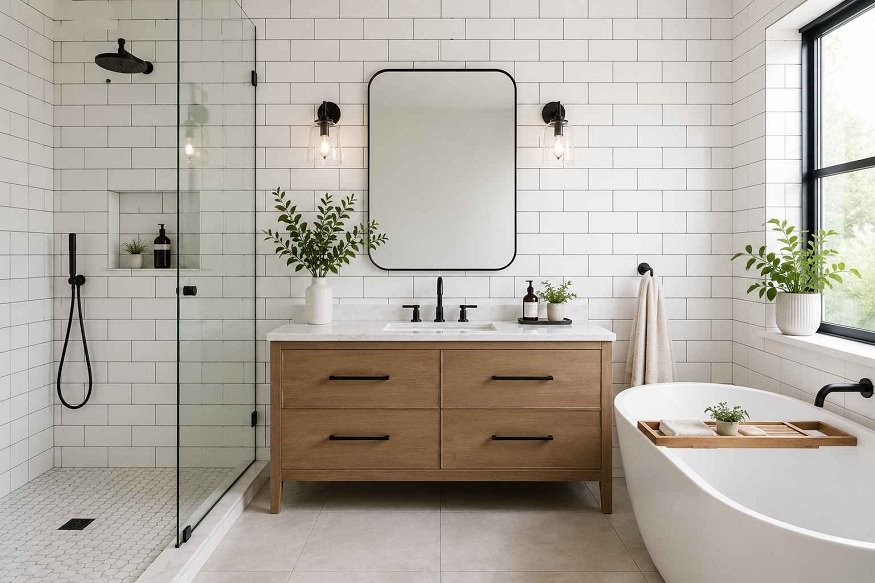
Wall tiles serve more than just to buffer surfaces from splashes and regular wear. They also have an impact on space perception and the eye’s composition as it traverses the room.
Tile can reverberate as an unseen accent or stand out as the focal point of a space. For example, as the finish, grout, and style of a subway tile change, it can have a classic or modern appearance. For this reason, wall tile is an excellent way of designing contemporary spaces. Here is how the tile choices will influence the interior design of day-to-day living:
1. Color Sets the Mood
Since color can quickly change the mood in a room, you need to think about it. They harmonize soft whites and light grays to bring down the drama and provide a calm backdrop. Not to mention, they intensify darker colors to create drama. Colors can also be effective when used on one wall, without soaking up the entire space.
Don’t just look around. Think about the materials that are available in your room, too. Cabinets, countertops, flooring, lighting, and furniture should complement the tile. They shouldn’t compete. A bold wall is best supported by simple elements in the immediate vicinity.
2. Size and Shape Define the Space
The size of a tile has an influence on the rhythm of a wall and on the eye’s flow. The use of large format tiles can help to create a cleaner look due to reduced grout lines. Smaller tiles will provide detail. However, long rectangles will widen or lengthen a wall depending on the direction of the tiles.
Read More: The Evolution of Visual Cues in Public and Commercial Spaces
Bright colors aren’t always necessary to add personality to a room, either. Hexagons, squares, thin rectangles, and various shapes are used to produce a variety of effects. A neutral tile, when used in a controlled fashion, can be a standout tile.
3. Texture and Finish Add Depth
Glossy, matte, textured, and stone-look finished paint will reflect light in different ways. A shiny surface will reflect more light. While a matte surface will usually make it appear softer. Textured tiles can offer texture and add some personality to an otherwise plain wall.
Lighting has the ability to change the appearance of tile. Natural light, warm lights, and cool lights might show various colors and sheen. If possible, test samples in the actual room. This helps to ensure that the final outcome will be the desired appearance.
Read More: Mediterranean Facade Ideas for Lasting Curb Appeal
In conclusion, many times, a wall tile selection can contribute to the creation of more than a wall design. Color sets the tone and mood, size and shape establish scale, layout helps to control the flow of movement, and texture creates depth. Then practical considerations guide you to an optimum design for everyday use.
The boldest or high-charge tile doesn’t always make the best choice. It’s the one that fits the room, serves the room’s function, and sets the tone you wish to create. So, factor in your interior design when installing to create a contemporary home.