
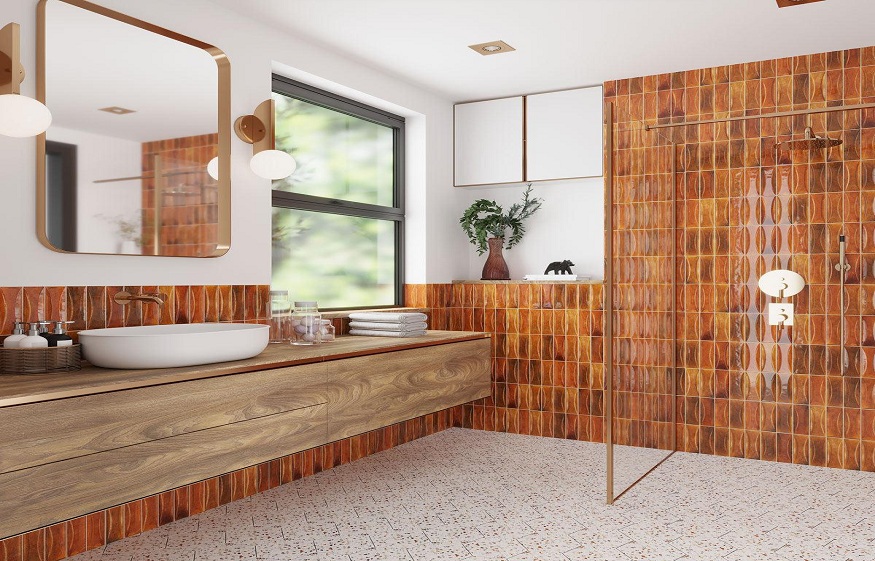
Designing small bathrooms can be challenging. There is not much space to play with.In addition, all surfaces are in view at once. So, one bad decision can lead to a cramped space.
Luckily, you can play with texture. It is one of the best ways to make your small shower area visually interesting. As long as you use it sparingly. The goal is to be purposeful.
Use these tips:
Select one statement texture
Too many textures at once? That is the worst thing that can happen in small bathroom design. It could be a combination of:
- A patterned floor
- A heavily textured shower tile
- A bold wallpaper.
The elements are all vying for space in the same small area. This creates visual noise instead of depth.
Instead, choose one element to play with the texture. Then keep the rest of the elements simple. For example, a textured shower tile can go well with neutral walls and fixtures. This allows that one element to really be the star of the show.
Use texture on vertical surfaces
When it comes to the walls, textureincreases visual depth.But on the floor, it makes a room feel cluttered. Hence, a busier and smaller look.
Use texture on vertical surfaces, such as:
Read More: Everything You Need to Know About Flushing Cisterns
- A shower wall
- A feature panel.
These are perfect places to add dimension. The eye naturally moves upwards, and the texture gives height and interest. But without taking away from the perceived floor size.
Use a tonal color palette
Texture provides just enough interest. So you don’t have to rely on strong contrasts with color to stand out. Avoid different color families as they bring harsh contrasts.
Instead, use one tone to unite different textures. This can make the texture itself work for you. It can help the space feel cohesive.
Too many shadescan make the room seem divided and smaller than it is.
Balance texture with reflective surfaces
Combine texture with a reflective element such as:
- A mirror
- A shiny tapware somewhere in the space
- Glossy tiles elsewhere in the space.
This will bounce light around the space. It helps to balance out the slightly heavier visual impact that texture brings. The balance makes a small bathroom open and airy even with a very dense tactile accent.
Play with grout and joint lines
Sometimes, a very patterned material can be distracting. Luckily, textural contrast doesn’t always have to be in the material. You can bring it out with:
Read More: When Your Home Doesn’t Fit Anymore: Next Steps to Take
- The arrangement of the tiles
- The color of the grout
- The distance between the joints.
This can add a degree of texture and rhythm to a wall space. It may not be as distracting as a heavily patterned wall.
Summing up
Texture should be used in moderation. It can make an ordinary bathroom shine. In short:
- Pick one detail to impart the texture.
- Limit the amount of color and tone to a more subdued palette.
- Add reflective surfaces to create an open and airy look.
Done thoughtfully, texture can make a small bathroom feel rich and considered.